Россия, г Железногорск


СДЕЛАЙТЕ СВОИ УРОКИ ЕЩЁ ЭФФЕКТИВНЕЕ, А ЖИЗНЬ СВОБОДНЕЕ
Благодаря готовым учебным материалам для работы в классе и дистанционно
Скидки до 50 % на комплекты
только до
Готовые ключевые этапы урока всегда будут у вас под рукой
Организационный момент
Проверка знаний
Объяснение материала
Закрепление изученного
Итоги урока

Была в сети 04.10.2026 04:02

Гузенко Галина Николаевна
учитель
 193
 180 003

Местоположение
Молодёжная мода
Категория:
Английский язык
04.10.2026 04:06

Просмотр содержимого документа
«Молодёжная мода»

Youth fashion styles
Computer Presentation
made for the 1 st Unit Spotlight
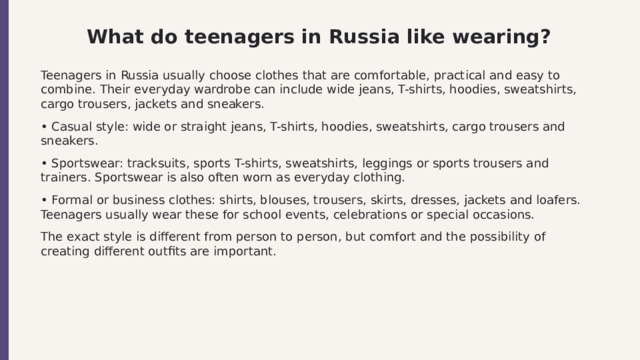
What do teenagers in Russia like wearing?
Teenagers in Russia usually choose clothes that are comfortable, practical and easy to combine. Their everyday wardrobe can include wide jeans, T-shirts, hoodies, sweatshirts, cargo trousers, jackets and sneakers.
• Casual style: wide or straight jeans, T-shirts, hoodies, sweatshirts, cargo trousers and sneakers.
• Sportswear: tracksuits, sports T-shirts, sweatshirts, leggings or sports trousers and trainers. Sportswear is also often worn as everyday clothing.
• Formal or business clothes: shirts, blouses, trousers, skirts, dresses, jackets and loafers. Teenagers usually wear these for school events, celebrations or special occasions.
The exact style is different from person to person, but comfort and the possibility of creating different outfits are important.

Modern youth fashion taste
Modern Russian youth fashion is a energetic blend of global trends and local identity . Teenagers in Russia use clothing as a primary tool for self-expression, often mixing high-street fashion with unique cultural markers.
THE VISUAL LANDSCAPE
Global Integration: Heavy influence from Western and Asian (K-pop) aesthetics.
Local Soul: A growing appreciation for Cyrillic typography and post-Soviet motifs.
Digital First: Outfits are often designed to look good on social media feeds like TikTok and VK.
Russian teens are moving away from "uniform" dressing toward eclectic styles that signal their belonging to specific subcultures or digital communities.
3
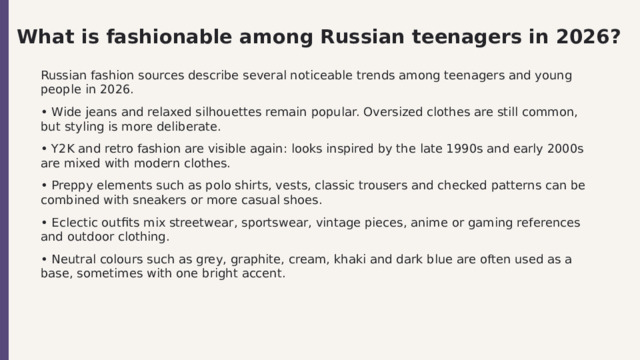
What is fashionable among Russian teenagers in 2026?
Russian fashion sources describe several noticeable trends among teenagers and young people in 2026.
• Wide jeans and relaxed silhouettes remain popular. Oversized clothes are still common, but styling is more deliberate.
• Y2K and retro fashion are visible again: looks inspired by the late 1990s and early 2000s are mixed with modern clothes.
• Preppy elements such as polo shirts, vests, classic trousers and checked patterns can be combined with sneakers or more casual shoes.
• Eclectic outfits mix streetwear, sportswear, vintage pieces, anime or gaming references and outdoor clothing.
• Neutral colours such as grey, graphite, cream, khaki and dark blue are often used as a base, sometimes with one bright accent.
5
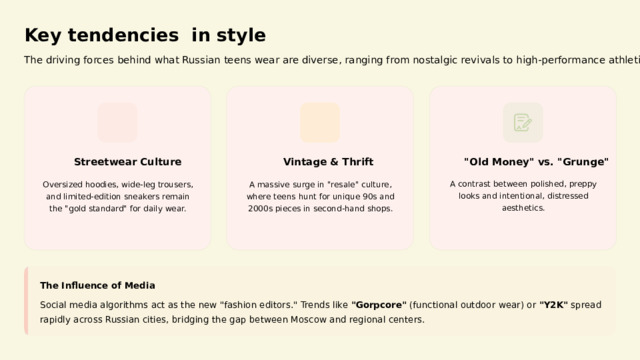
Key tendencies in style
The driving forces behind what Russian teens wear are diverse, ranging from nostalgic revivals to high-performance athletic wear.
Vintage & Thrift
Streetwear Culture
"Old Money" vs. "Grunge"
Oversized hoodies, wide-leg trousers, and limited-edition sneakers remain the "gold standard" for daily wear.
A massive surge in "resale" culture, where teens hunt for unique 90s and 2000s pieces in second-hand shops.
A contrast between polished, preppy looks and intentional, distressed aesthetics.
The Influence of Media
Social media algorithms act as the new "fashion editors." Trends like "Gorpcore" (functional outdoor wear) or "Y2K" spread rapidly across Russian cities, bridging the gap between Moscow and regional centers.
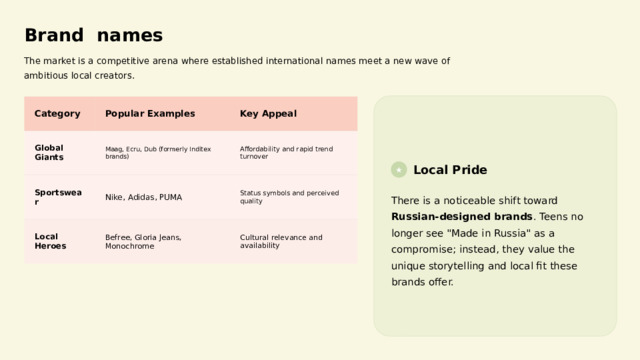
Brand names
The market is a competitive arena where established international names meet a new wave of ambitious local creators.
Category
Popular Examples
Global Giants
Key Appeal
Sportswear
Maag, Ecru, Dub (formerly Inditex brands)
Nike, Adidas, PUMA
Affordability and rapid trend turnover
Local Heroes
Status symbols and perceived quality
Befree, Gloria Jeans, Monochrome
Cultural relevance and availability
★
Local Pride
There is a noticeable shift toward Russian-designed brands . Teens no longer see "Made in Russia" as a compromise; instead, they value the unique storytelling and local fit these brands offer.

Why do teenagers wear these clothes?
There are several reasons why these styles are popular. First, comfortable clothes are practical for school, walking, meeting friends and other everyday activities.
Social media also affects fashion. Teenagers can quickly discover styles from videos, films, music, Korean culture, gaming and other online communities. This makes trends spread very quickly.
Another reason is self-expression. Many young people combine different styles instead of following one strict fashion rule. For example, a classic shirt can be worn with wide jeans and sneakers.
Price also matters. Russian fashion research shows that consumers increasingly compare prices and look for versatile clothes that can be worn in different situations.

Where do Russian teens go shopping?
The shopping experience has split into two distinct worlds: the social atmosphere of the mall and the efficiency of the smartphone.
The Digital Shift
Social Malls
Marketplaces like Wildberries and Ozon have become the primary destination for clothing due to their massive logistics networks.
However, shopping malls remain essential "hangout" spots where the act of trying on clothes is a shared social activity with friends.

9
Financial habits
Fashion is a significant financial priority for Russian youth, but spending is often a calculated effort involving both personal and family resources.
Financial Decision Making
Budgeting: Most teens rely on monthly allowances or specific "back-to-school" budgets provided by parents.
Smart Shopping: High usage of cashback apps , promo codes, and seasonal sales (Black Friday, Cyber Monday).
Investment Pieces: While daily wear is cheap, teens save for months for a single pair of branded sneakers .

How much does a teenager's outfit cost in Russia?
There is no official Russian statistic that gives one average price for a complete teenage outfit. However, 2026 data can give us useful reference points.
• The average spending on school clothes in online purchases was 13,306 rubles in July–August 2026.
• The average spending on children's shoes in the same analysis was 9,195 rubles.
• Together, these figures give about 22,500 rubles as an illustrative school clothing + shoes budget. This is NOT an official average price of one outfit; it is a simple calculation from two separate averages.
For a basic everyday outfit, prices can be much lower or higher depending on the shop, brand, discounts and whether the clothes are bought online or in a physical store.
11
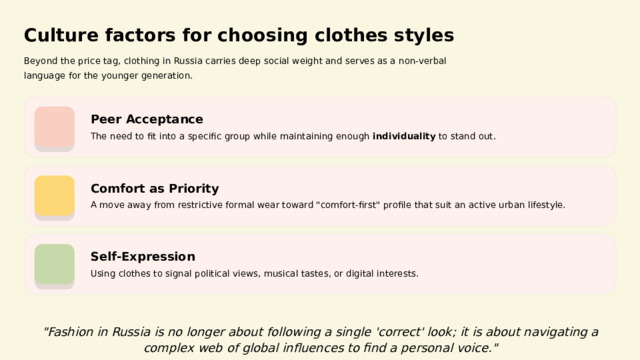
Culture factors for choosing clothes styles
Beyond the price tag, clothing in Russia carries deep social weight and serves as a non-verbal language for the younger generation.
Peer Acceptance
The need to fit into a specific group while maintaining enough individuality to stand out.
Comfort as Priority
A move away from restrictive formal wear toward "comfort-first" profile that suit an active urban lifestyle.
Self-Expression
Using clothes to signal political views, musical tastes, or digital interests.
"Fashion in Russia is no longer about following a single 'correct' look; it is about navigating a complex web of global influences to find a personal voice."
12
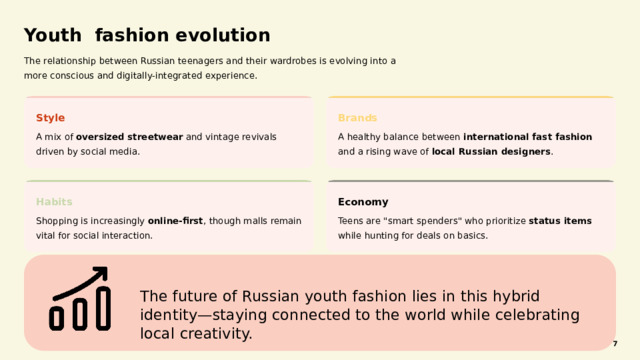
Youth fashion evolution
The relationship between Russian teenagers and their wardrobes is evolving into a more conscious and digitally-integrated experience.
Style
Brands
A healthy balance between international fast fashion and a rising wave of local Russian designers .
A mix of oversized streetwear and vintage revivals driven by social media.
Habits
Economy
Shopping is increasingly online-first , though malls remain vital for social interaction.
Teens are "smart spenders" who prioritize status items while hunting for deals on basics.
The future of Russian youth fashion lies in this hybrid identity—staying connected to the world while celebrating local creativity.
7
Conclusion
In Russia in 2026, teenage fashion is diverse rather than based on one single style. Casual clothes, sportswear and relaxed silhouettes are common, while Y2K, preppy and eclectic combinations are also visible trends.
Comfort, self-expression, social media and price all influence what teenagers choose to wear. Many outfits are designed to be practical and suitable for more than one situation.
The Russian market is also becoming more digital: online shopping and marketplaces are important places to look for clothes and compare prices.
Overall, teenage fashion shows how young people combine comfort, personal taste and current cultural trends.



Вебинар для учителей
🎓 Свидетельство об участии ✨БЕСПЛАТНО!✨